About
United North
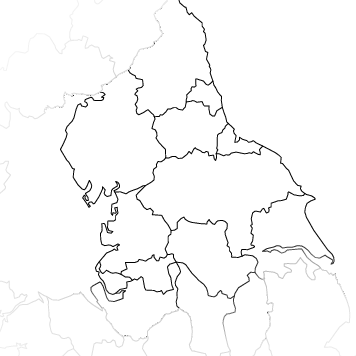
United North is a cultural and academic platform concerned with the shared histories, identities, and futures of the north of the United Kingdom.
It exists to provide connective infrastructure between northern institutions, societies, and individuals, particularly within universities, where regional identity, cultural memory, and place based experience often sit quietly beneath national narratives.
The project recognises that the north of England, Scotland, Wales, and Northern Ireland each possess distinct traditions, political cultures, and social priorities. United North does not seek to collapse these differences. Instead, it provides a framework through which they can be acknowledged, placed in dialogue, and understood in relation to one another.
At its core, United North is facilitative rather than directive. It does not govern, represent, or speak on behalf of its participants. Affiliated societies and networks retain full independence, identity, and autonomy. United North exists to support recognition, exchange, and collaboration where desired, and to remain unobtrusive where it is not.
The platform is intentionally non partisan and non commercial. Its focus is cultural, academic, and civic in the broadest sense, creating space for long term thinking about regional identity, cooperation, and shared responsibility across the north.
United North is conceived as a gradual project. It privileges continuity over immediacy, clarity over scale, and institutional trust over visibility. Its form is expected to evolve over time, shaped by the people and organisations that choose to engage with it.
Origins
United North emerged from the Cambridge University Northern Society.
Within the university context, the society brought together students from across the north of England. It became increasingly apparent that similar northern societies existed across multiple universities, often operating independently despite shared regional experience and perspective.
United North was formed to address this absence of connection. Its initial aim was to provide a hub through which university northern societies could identify one another, communicate across institutions, and explore collaboration where there was mutual interest.
The platform grew organically from existing society structures rather than as a separate or imposed body. It was conceived as connective rather than representative, preserving the autonomy, identity, and independence of each participating society.
While its origins lie within the university context, United North was structured from the outset to allow for continuity beyond student life, supporting longer-term networks and relationships where appropriate.
United North remains at an early stage of development. Its history is ongoing and its form is expected to evolve carefully, guided by use rather than ambition.
 United North